If you are looking at short-term rental opportunities around Celebration, it is easy to get pulled in by the tourism numbers and overlook the details that make or break a deal. This part of Central Florida sits near one of the busiest visitor markets in the country, but not every property is a good fit for vacation-rental use. If you want to buy with purpose, you need to understand demand, zoning, community rules, and true operating costs before you close. Let’s dive in.
Why Celebration draws investor attention
Celebration benefits from the larger Orlando tourism engine. Visit Orlando reports 76,663,200 visitors in 2025, along with 57,669,226 passengers through Orlando International Airport and 2,047,768 attendees at Orange County Convention Center events. That kind of visitor volume helps explain why the corridor stays on many investors’ radar.
The guest profile matters too. Visit Orlando says domestic leisure trips averaged 2.4 people per party in 2025, and 29% of those travel parties included children under 18. For you as an investor, that points toward demand for homes that work well for families and small groups, not just compact hotel-style stays.
Experience Kissimmee also describes Osceola County as the Vacation Home Capital of the World, with more than 30,000 professionally managed vacation properties. The market includes everything from single-family homes to large villas, and the amenities highlighted most often include private pools, game rooms, themed rooms, and spacious layouts. That gives you a useful picture of what guests are already booking in the area.
Why Celebration requires extra screening
Celebration is not a simple one-rule-fits-all community. According to the official Celebration website, the area operates with layered governance that includes the Celebration Residential Owners Association, or CROA, and the Celebration Community Development District, or CDD. CROA addresses homeowner issues such as dues, covenants, and certain community amenities, while the district handles broader infrastructure and maintenance.
That structure matters because you are not only evaluating a purchase price and nightly revenue potential. You are also evaluating multiple layers of rules, fees, and approval requirements. In practice, that means one property may look strong on paper but become much less attractive once community restrictions and recurring costs are fully reviewed.
What properties may fit best
In the broader Osceola and Kissimmee vacation-home market, larger homes often align better with the local guest mix. That is based on the area’s family-oriented travel patterns and the features commonly highlighted in successful vacation rentals. Multiple bedrooms, enough bathrooms, larger kitchens, and flexible spaces tend to support the kind of stay many travelers want.
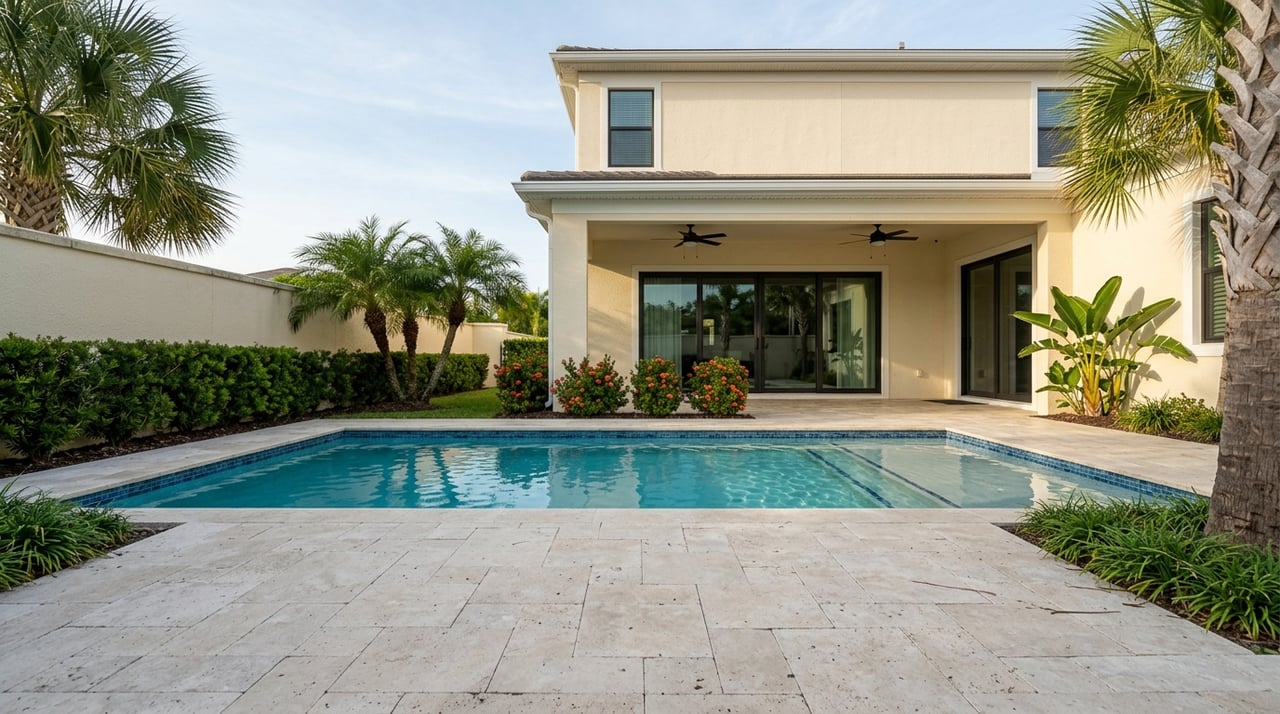
You may also want to pay close attention to amenities that improve usability for groups. Private pools, game rooms, and layouts that allow guests to spread out can strengthen appeal in this market. In some communities, resort-style amenities may also add value, but they should be weighed against fees and any use restrictions.
This does not mean every larger home is automatically a strong investment. It means the home’s layout should match likely demand. If a property looks attractive but functions poorly for a family or multi-couple stay, that disconnect can affect performance.
Start with zoning, not guesswork
Before you get too far into underwriting, confirm whether the parcel is in an area where short-term rentals are allowed. Osceola County has a short-term rental public district, identified as STRPD, and the county directs buyers to verify zoning first. The county also advises contacting planning and zoning for parcel-specific confirmation, which is an important reminder that this is a property-by-property decision.
That point is critical around Celebration. A nearby address, a resort-style look, or even an existing furnished setup does not guarantee that short-term rental use is allowed. If you skip zoning verification early, you can waste time on a property that never fits your investment plan.
The approvals you may need
Osceola County outlines a sequence that buyers should understand before closing. If zoning allows the use, the next steps may include applying for a Florida DBPR vacation-rental license and registering for a Local Business Tax Receipt with the county tax collector. The county tax collector notes that the receipt can be issued only after the business meets applicable requirements and passes reviews that may include zoning, environmental health, and building review.
DBPR also states that it does not control where a vacation rental can be located or how often it can be rented. That means local government rules and recorded community documents are the real gatekeepers. In other words, a state license does not replace local compliance.
Why HOA and condo documents matter so much
Community rules can change the entire investment picture. Osceola County specifically warns that subdivisions and planned developments may have additional use limits, architectural standards, or other restrictions. That means county-level approval alone is not enough.
Florida law also adds nuance. Under the state HOA statute, some rental amendments adopted after July 1, 2021 may apply only to new buyers or owners who consent, but HOAs can still adopt certain rental duration rules and annual rental caps that apply more broadly. For condominiums, similar protections and restrictions exist, which means the exact parcel history and governing documents matter.
In a layered community like Celebration, you should review the declaration, bylaws, and amendments for the specific property you want to buy. This is where many investors either protect themselves or make an expensive mistake.
What to review before you buy
A practical screening process can help you avoid emotion-based decisions. Before you move forward, review these questions carefully:
- Is the parcel in zoning that allows short-term rental use?
- What do the recorded declaration, bylaws, and amendments say about minimum stay length?
- Are there rental caps, approval requirements, guest registration rules, or parking limits?
- What rules address occupancy, noise, fines, or amenity use?
- What are the full recurring costs once dues, assessments, licensing, tax obligations, insurance, and management are included?
- Does the layout fit likely guests, especially families or group travelers?
This kind of checklist keeps you grounded in facts. It also helps you compare properties based on risk and usability, not just on asking price or projected nightly rate.
Do not overlook taxes in your underwriting
Many investors focus on mortgage, HOA dues, and maintenance first. Those costs matter, but taxes tied to short-term rentals need to be modeled as well. In Florida, transient rentals tax under section 212.03 is 6% on qualifying short-term lodging, and Osceola County says the Tourist Development Tax is also 6% on short-term rentals.
Osceola County also states that it is not contracted with platforms such as Airbnb, Vrbo, or Evolve for this tax collection. That means owners or their agents must collect and remit the county tax. If you leave that out of your underwriting, your projected returns may look better than reality.
A simple way to evaluate opportunity
When you evaluate short-term rental opportunities around Celebration, it helps to think in three layers: demand, compliance, and operations. Demand tells you whether travelers are likely to want the product. Compliance tells you whether you can legally and practically use the property as planned.
Operations tell you whether the numbers still work after every recurring cost is counted. A property that checks all three boxes is usually more compelling than one with a flashy setup but weak compliance. In this market, compliance is part of the investment thesis, not a back-office detail.
Build the right local team
The research also points to the value of a strong local team before closing. For a property in or around Celebration, that may include a local REALTOR familiar with Osceola zoning and community documents, a Florida real estate or HOA attorney, a CPA experienced with lodging-tax reporting, a property manager with Osceola vacation-rental experience, and an insurance broker who writes short-term-rental policies.
If you are buying from out of area, this team becomes even more important. The goal is not just to find a property that looks marketable. The goal is to find one that is marketable, compliant, and realistically profitable.
The bottom line for buyers
Short-term rental opportunities around Celebration can be attractive because they sit near one of the strongest tourism corridors in the country. But the best opportunities are usually not the ones with the flashiest listing photos. They are the ones that fit family and group demand, clear zoning review, survive HOA or condo scrutiny, and still make sense once taxes, fees, insurance, and management are fully counted.
If you want to buy with a clear plan instead of a guess, a step-by-step screening process can save you time, money, and stress. For strategy-first guidance on evaluating vacation-rental properties in Central Florida, connect with Abe Mendez.
FAQs
What makes Celebration-area short-term rentals appealing to investors?
- Celebration is near a major tourism corridor with strong visitor volume, family travel demand, and a large existing vacation-home market across Osceola County.
What should you verify first for a short-term rental near Celebration?
- You should first verify parcel-specific zoning and confirm that short-term rental use is allowed before underwriting the deal further.
Why do HOA and condo rules matter for Celebration short-term rentals?
- Community documents may limit rental length, cap the number of rentals, require approvals, or impose guest and parking rules even if county zoning allows the use.
What taxes apply to short-term rentals in Osceola County?
- Florida transient rentals tax is 6% on qualifying short-term lodging, and Osceola County says its Tourist Development Tax is also 6% for short-term rentals.
What property features often fit the Osceola vacation-rental market?
- Homes with multiple bedrooms and bathrooms, larger kitchens, private pools, and flexible group-friendly spaces often align better with the area’s family and group travel patterns.
Who should help you evaluate a short-term rental around Celebration?
- A local REALTOR, Florida real estate or HOA attorney, CPA, property manager, and insurance broker can help you review zoning, community rules, taxes, operations, and risk before closing.